
Aftercare for Microblading, Nano & Powder Brows: Advice From a PMU Artist Known for Consistent Proven Healed Results

Updated: Sep 1
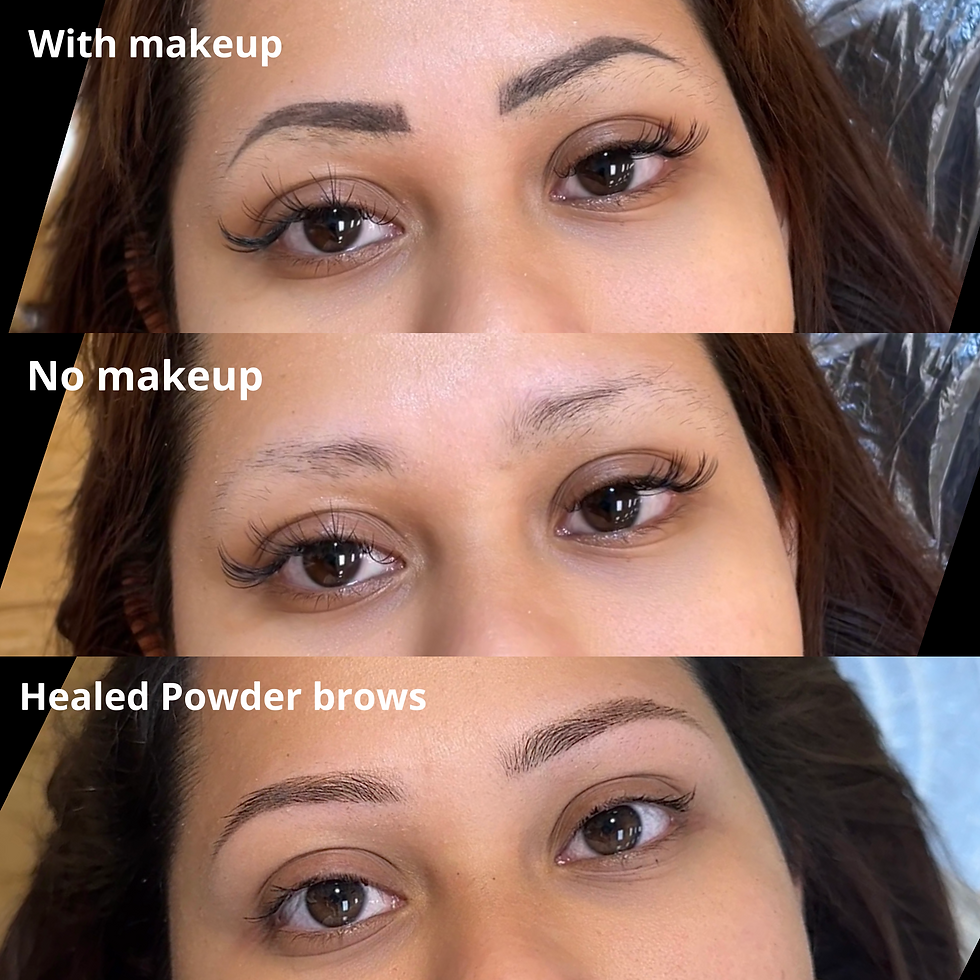
I'm a PMU brow artist and trainer, and one thing I consistently showcase is my clients’ healed results. I believe healed results—not just fresh photos—are one of the best ways to evaluate an artist’s work. That’s why the aftercare advice in this guide is based on real healed outcomes I see regularly in my own clients.
What to Expect During the Healing Process
Days 1–5: Fresh Brows
What You’ll Notice
During the first few days, your brows will appear darker and more defined than they will once fully healed. This is completely normal and expected. Many of my clients actually love their brows during this stage because they appear extra full and crisp.
Aftercare Instructions
Gently clean your eyebrows each morning using a damp clean towel, then carefully pat them dry.
Avoid rubbing, scratching, or scrubbing the area.
If your brows begin to feel dry or itchy, apply a very thin layer of Vaseline or Aquaphor using a clean cotton swab.
Never apply ointment to wet or damp brows.
Avoid applying ointment with your fingers to reduce the risk of introducing bacteria.
Why This Matters
Using too much ointment can interfere with the skin’s natural healing process. A very thin layer is all that’s needed to relieve dryness while still allowing the skin to heal properly.
⸻
Days 5–14: The Healing Stage
What You’ll Notice
As your skin continues healing, you may experience itching, light flaking, or scabbing.
However, every client heals differently.
Although dramatic healing photos often circulate online, many of my own clients report little to no noticeable scabbing at all. Instead, their brows simply become softer and lighter over several weeks. Others experience more visible flaking. Both healing patterns can be completely normal.
Aftercare Instructions
Continue gently cleaning your brows.
Never pick peeling skin or scabs.
Why You Should Never Pick Scabs
Removing flakes before they naturally separate can also remove pigment that is still settling into the skin. It may also increase irritation and prolong the healing process.
Allow everything to fall away naturally.
Important Things to Keep in Mind During Healing:
Avoid heavy sweating and intense exercise.
Avoid swimming and prolonged water exposure.
Do not apply makeup directly over the healing brows.
Wash your hands before touching the area.
Keep pets away from the healing brows.
Limit alcohol consumption, as excessive drinking may slow the body’s healing response.
Avoid direct shower spray hitting your brows.
Avoid retinol products directly on the brows
Avoid chemical exfoliants such as glycolic acid, lactic acid, and AHAs
Avoid laser treatments
Avoid chemical peels
Avoid facials around the brow area
Avoid excessive tanning
⸻
Days 14-30 (the ghosting phase)
By this point, most of the surface healing has finished.
Your brows may appear lighter or even patchy compared to how they looked immediately after your appointment.
Don’t panic.
This is a completely normal stage of healing. As your skin continues to regenerate over the next several weeks, the color gradually becomes more visible again.
⸻
My brows are fully healed (6+ weeks), why did they heal too light?
This is one of the most common concerns clients have after their brows heal.
And sometimes, the problem isn’t actually poor retention—it’s unrealistic expectations about what healed permanent makeup is supposed to look like.
Freshly tattooed brows are darker, sharper, bolder, and more defined because the pigment has just been implanted into the skin. Healed permanent makeup is not supposed to look exactly like Day One. Once the skin heals over the pigment, the result naturally appears softer and lighter.
The problem is that most of what clients see online is fresh work.
When you constantly see beautiful, crisp, freshly tattooed brows on Instagram, it’s very easy to assume that’s approximately what your brows will look like once healed. Then, when your own brows soften significantly during the healing process, it can feel like something went wrong.
But in many cases, that fading was expected from the beginning.
This is especially important when it comes to hairstroke techniques such as microblading and nano brows. Hairstrokes are designed to be extremely fine and natural-looking, and they can heal much softer and less visible than they appeared immediately after the procedure.
In fact, well-done hairstrokes can sometimes heal so subtle that clients feel as though they barely had anything done.
That’s something I always warn my hairstroke clients about beforehand. If you choose a very natural technique, you also have to be comfortable with a very natural healed result. If what you actually want is a brow that remains natural but still has noticeable fullness and definition once healed, an extremely subtle hairstroke result may not meet your expectations.
If you want to learn more about this, click here to read my detailed guide on why brows disappear.
⸻
After 2 Months - The Touch-Up
Touch-Up Appointments Matter
Approximately 8 weeks after your initial appointment, your brows are considered fully healed and a touch-up session is recommended.
The touch-up allows your artist to reinforce areas where pigment healed lighter, adjust any irregularities that appeared during the healing process, and improve longevity.
Many clients achieve their best healed results after the touch-up appointment.
⸻
Final Thoughts
Beautiful healed brows are the result of four things working together:
Technique chosen
A skilled artist
Your skin
Proper aftercare
Healing looks different for everyone. Some clients experience more noticeable flaking, while others heal so gradually that they barely notice any changes. Both experiences can be completely normal.
Following these aftercare recommendations gives your brows the best opportunity to heal beautifully and retain pigment for long-lasting results.
If you have any questions during your healing process, don’t hesitate to reach out. I’m always happy to help guide my clients through every stage of healing.
Read next:
Comments